When a single kilogram saved from a body structure can deliver a tangible range gain in an electric vehicle, the profile cross‑section on an engineer’s screen is never arbitrary. Selection of automobile lightweight aluminum profiles starts with three hard gates: the alloy’s proof strength, the extruder’s dimensional capability, and the supplier’s downstream processes. Get one wrong and the cost is measured in failed fatigue tests, assembly line stops, or warranty claims. The remainder of this article works through those gates, moving from material science to practical procurement.
Contenido
Every automotive aluminum profile begins with the alloy designation. The choice dictates extrudability, strength, corrosion resistance, and weldability—and 6xxx series alloys dominate precisely because they balance those properties for mass‑produced vehicles.
Heat‑treatable Al‑Mg‑Si alloys deliver medium‑to‑high strength and excellent hot workability. Alloy 6082‑T6 remains the preferred grade for anti‑collision boxes, bumper reinforcements, and battery tray side rails because it provides a tensile strength above 300 MPa without sacrificing ductility. 6005A‑T6 is frequently specified for multi‑hollow threshold beams where wall thicknesses can drop to 1.8 mm while maintaining crashworthiness. 6061‑T6 appears in motor housings and general brackets where machining after extrusion is required.
The table below maps frequently specified alloys to typical automotive sub‑assemblies.
| Alloy | Tensile Strength Range (MPa) | Typical Automobile Component |
|---|---|---|
| 6005A‑T6 | 260–310 | Battery tray frames, threshold beams |
| 6061‑T6 | 290–330 | Motor housings, structural brackets |
| 6082‑T6 | 310–340 | Anti‑collision boxes, bumpers |
| 7075‑T6 | 510–570 | High‑load suspension carriers |
When load paths demand tensile strength beyond 500 MPa, 7075‑T6 enters the conversation—typically for suspension links or heavily loaded carriers. Its lower elongation and higher quench sensitivity, however, make hollow profiles far more difficult to extrude. Buyers should demand longitudinal tensile test data from the first‑off tooling trial before releasing a 7xxx series die for production.
Automotive profiles rarely resemble simple angles; most are multi‑void sections with internal webs designed to absorb energy or channel fluids. A battery tray rail, for example, can contain four to eight closed chambers. Dimensional capability must be scrutinized in three areas.
Wall thickness consistency: variations above ±0.1 mm in critical webs alter crush response in a side‑pole impact. Profile straightness: a camber of more than 1 mm per metre complicates robotic welding and assembly. Surface condition: die lines deeper than 10 µm can act as crack initiation points under cyclic loading. Presses with a capacity of at least 2,500 tonnes and indirect extrusion lines routinely outperform older equipment on these metrics. Request a capability study that includes Cpk values for wall thickness and diameter before awarding a long‑term contract.
The migration toward dedicated EV platforms has turned aluminum extrusions into fully stressed structural elements. Current program requirements fall into clear families.
A specialist extruder who covers this breadth—from crash elements to fluid‑carrying profiles—removes the need to qualify multiple separate suppliers. For a concrete example, the product portfolio at Huilv‑Alu spans battery tray aluminum profiles, anti‑collision box extrusions, motor housings, and threshold beams, all produced on a common manufacturing platform.
Under‑body components and exposed structural parts face road salt, brake dust, and stone impact. Bare mill finish is rarely sufficient. The treatment route must be selected alongside the alloy and profile geometry.
For battery trays and motor housings, chromate‑free anodising with a film thickness between 10 and 15 µm provides the baseline corrosion protection. Parts in visible zones—such as sill trims or cross‑car beams—often receive a polyester powder coat after a conversion pre‑treatment. Verify that the supplier can perform the entire surface treatment chain in‑house, including racking, etching, anodising, and sealing, because shipping extruded lengths to a third‑party coater compromises lead time and dimensional stability.
Extrusion tooling cost is a one‑time charge that typically ranges from $2,000 to $8,000 per die, depending on diameter and complexity. But the tooling line item hides the real cost levers.
Minimum order quantities: automotive programs often run 20,000–50,000 linear metres annually. Falling far below that threshold pushes the unit cost up because of die‑change overhead. Scrap rate: a factory with in‑line quench and automated billet handling can keep process scrap below 12%, while older presses may reach 20%. Quenching method: spray quench versus water bath influences both residual stress and work‑piece distortion; insist on a quench curve that matches the alloy specification. Packaging and logistics: fragile multi‑hollow profiles require dedicated stillages to avoid transit damage. Build these items into a total‑cost‑of‑ownership comparison, not just the per‑metre price.
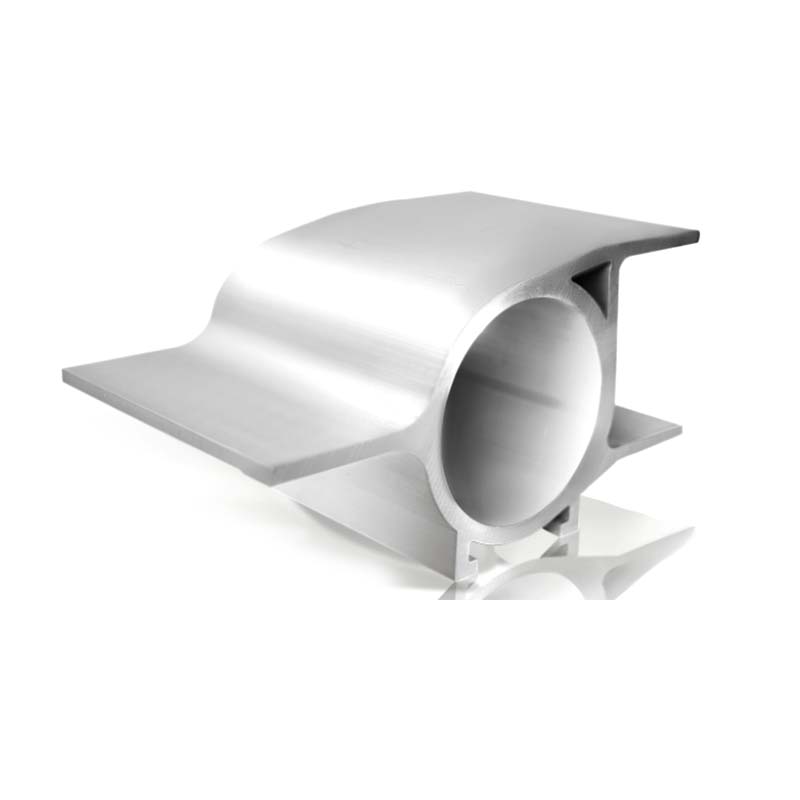
Price is rarely the decisive criterion for a safety‑critical extrusion. A systematic qualification process weighs five factors:
When those five boxes are ticked, the discussion moves from cost per kilo to life‑cycle reliability. For any procurement team evaluating a new design, beginning the conversation with a qualified extruder—one that regularly delivers certified profiles for battery enclosures, crash boxes, and motor housings—cuts the development timeline by weeks. Accessing the technical foundation of a plant such as Huilv‑Alu gives engineering buyers a real reference point for what is achievable at production scale.
 +86-19156366875
 No. 1016, Calle Baocheng, Zona de Desarrollo Económico y Tecnológico, Ciudad de Xuancheng, Provincia de Anhui, China
Derecho de Autor© Grupo Anhui Huilong Huilv New Material Technology Co., Ltd. Todos los derechos reservados
Fabricantes de perfiles de aluminio